
As parents, we want our kids to grow up kind, curious, and accepting of others. That starts with the conversations we have at home—especially when it comes to understanding differences like autism. Whether your child has a classmate, neighbor, or family member with autism, helping them understand what it means can build empathy and make the world a little more inclusive.
Here’s how to explain autism to your kids in a way that’s honest, simple, and age-appropriate.
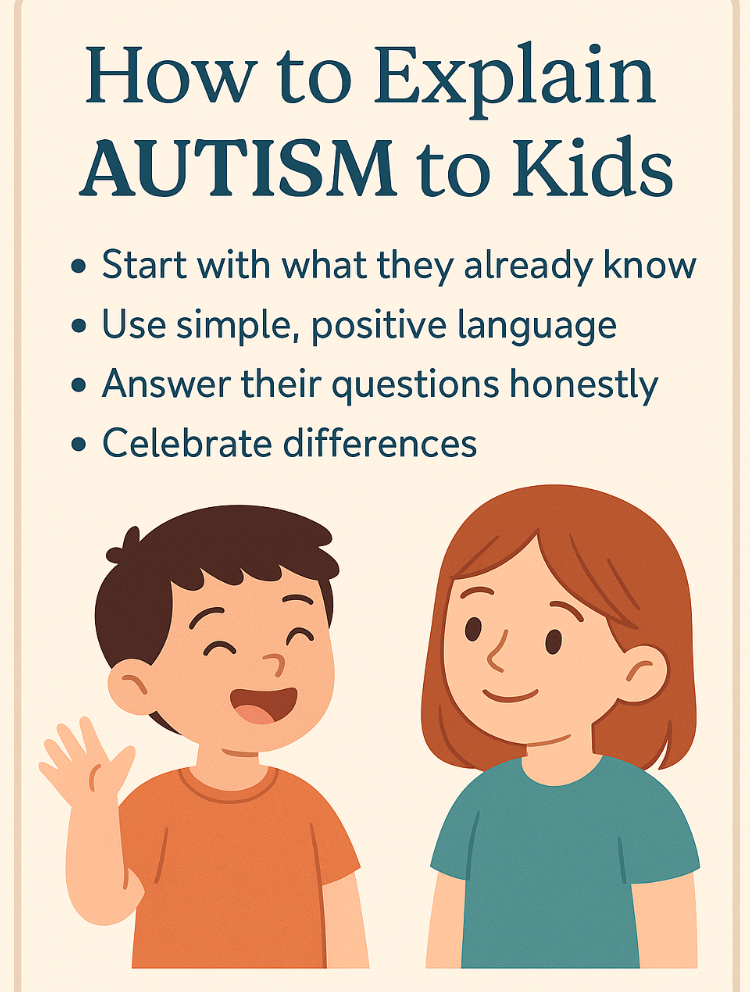
Start With What They Already Know
The best way to begin is by connecting autism to something your child can relate to.
You can say something like:
“You know how everyone is different? Some people are really fast runners, some are good at drawing, and some are super funny? Well, brains are different too. People with autism have brains that work in a unique way.”
This opens the door without making autism feel like something strange or scary—it just makes it something that’s part of who someone is.
Use Simple, Positive Language
Kids don’t need long explanations or medical terms. Keep it simple and positive.
Try:
“Autism means someone might think, play, or talk differently than you do. Some kids with autism like quiet places, or they may not talk a lot. Some love to line up toys or focus on one thing for a long time. That’s just the way their brain works.”
You can also explain that some kids with autism may not show feelings the same way or might have a hard time making friends—but they still want friends.
Answer Their Questions Honestly
If your child asks, “Why does that kid flap their hands?” or “Why doesn’t she talk?”, don’t shush them—use it as a teachable moment.
You might say:
“That’s one way some people with autism express themselves. It helps them feel calm or happy. Everyone has their own way of showing how they feel.”
When we give calm, honest answers, kids learn that it’s okay to be curious—and even better to be kind.
Talk About Fair vs. Equal
This is a big one in school settings. Sometimes, kids with autism may get extra help or need different rules. That can be confusing for other kids.
Try explaining it this way:
“Fair doesn’t always mean everyone gets the same thing. It means everyone gets what they need to be successful. Just like someone with a broken leg uses crutches, someone with autism might use a tool to help them learn.”
Celebrate Differences
Don’t just stop at explaining what autism is—talk about the amazing things autistic kids can do.
You can say:
“Some kids with autism are amazing at math, or remember lots of facts, or have great imaginations. They might see the world in ways we never thought of. That’s something to celebrate!”
Lead With Kindness
The goal isn’t just understanding—it’s encouraging your child to be kind, inclusive, and thoughtful.
Ask them:
“What could you do to be a good friend to someone who thinks or talks differently?”
Encourage them to sit with the quiet kid, share a toy, or just smile and say hello.
Your Turn!
Explaining autism to your kids doesn’t have to be complicated. Keep it simple, be open to their questions, and always bring it back to kindness. The more we talk about these things, the more natural it becomes—and the better our kids will be at welcoming everyone for exactly who they are.
Because every kid deserves to feel seen, valued, and understood.
